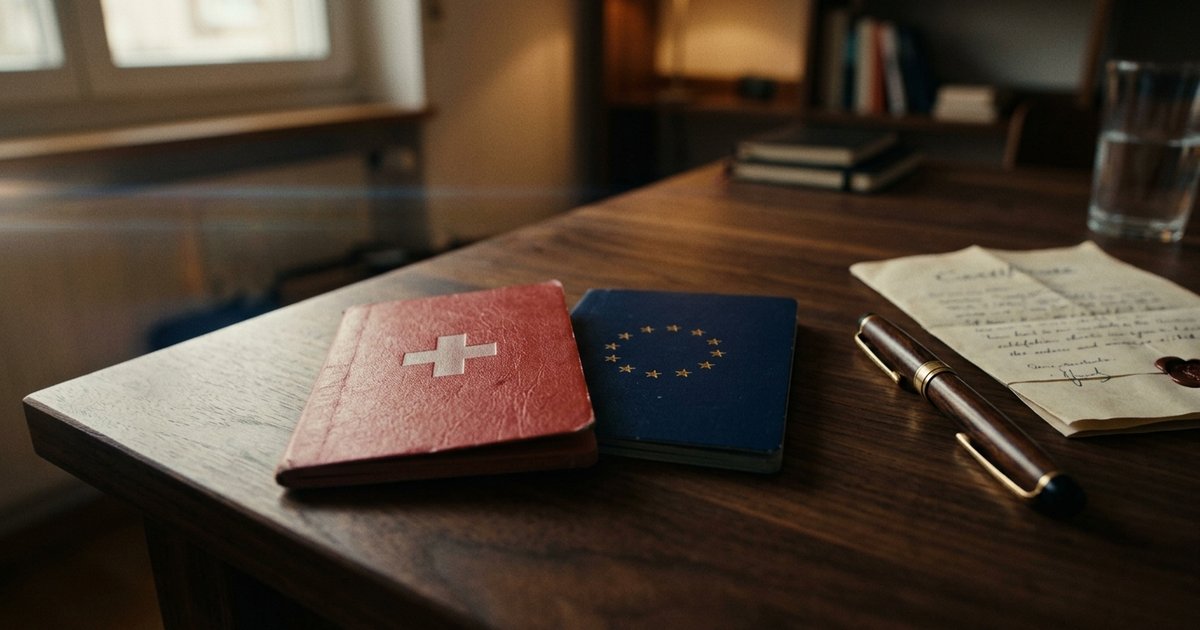
Yes, Switzerland allows dual citizenship
Since 1992. Before that, you had to give up your previous citizenship to become Swiss. Not any more. You can keep your existing passport and gain the Swiss one alongside it.
This applies in both directions, incidentally. If a Swiss citizen acquires another nationality, they do not automatically lose their Swiss one. That, too, used to be different.
But: what does your country of origin say?
This is where it gets interesting. Switzerland has no problem with two passports, but your country of origin might.
Some examples:
Germany: Straightforward since June 2024. The reformed Nationality Act (StARModG) allows multiple nationality without restriction. Anyone who receives a Swiss passport no longer automatically loses German citizenship. Previously a retention permit was required; not any more.
Austria: As strict as Germany used to be. You lose Austrian citizenship on acquiring another one. Exceptions are rare and must be approved in advance.
Italy, France, Portugal, Spain: No problem. These countries allow dual citizenship without restrictions.
Turkey: Permitted. You can hold both passports.
China: Does not allow dual citizenship. If you become Swiss, you automatically lose Chinese citizenship.
Important: check with the embassy or consulate of your country of origin before submitting your naturalisation application. Not all rules are clear-cut, and some change.
What actually happens with two passports?
Surprisingly little changes day to day. You travel on whichever passport is more practical at the time. Into Switzerland on the Swiss passport, into your country of origin on the other. That is it.
Military service is a topic that sometimes comes up. Switzerland generally requires military service or a substitute tax from male citizens. If you have already completed military service in your country of origin, this can sometimes be credited. Ask your district command (Kreiskommando).
You pay tax where you live. Swiss tax liability depends on residence, not citizenship. That is different from, say, the United States, where citizens are taxed worldwide.
Special case: simplified naturalisation through marriage
If you are married to a Swiss citizen, you can apply for simplified naturalisation. The requirements are more relaxed: 5 years of residence in Switzerland and 3 years of marriage. And yes, dual citizenship is possible here too.
Children with dual citizenship
Children born in Switzerland to a Swiss parent acquire Swiss citizenship automatically at birth. If the other parent holds a different nationality, the child usually gets both. Two passports from day one.
For the 3rd generation, meaning cases where your grandparents immigrated to Switzerland, there has been a simplified naturalisation route since 2018. Dual citizenship is not an obstacle here either.
The short version
Switzerland says yes. Since June 2024, Germany says yes too. Your country of origin might still say no. Clarify that first, before you submit the application. Anyone from Italy, France, Germany, Turkey, Portugal or Spain has nothing to worry about. Anyone from Austria needs to sort out a permit or give up their old citizenship. And anyone from China has to choose.
You will find every step towards naturalisation in our free guide.
How does it work in your canton?
Fees, deadlines and requirements differ from canton to canton.